Apple AI leadership change

Apple's AI Reimagined: Decoding the Leadership Shift and Siri's Future
The tech world is abuzz with the news of a significant Apple AI leadership change, as John Giannandrea, Apple's Vice President of Machine Learning and AI Strategy, has reportedly stepped down from his role. This pivotal development, particularly in the wake of persistent challenges surrounding Siri, signals a potential strategic realignment within Apple's formidable AI division. For tech enthusiasts, developers, and industry professionals, understanding the ramifications of this transition is crucial for anticipating Apple's next moves in the fiercely competitive artificial intelligence landscape.
Giannandrea's departure, a move that has been followed closely by industry observers, comes at a critical juncture for Apple. While the company continues to innovate across its hardware and software ecosystems, its AI endeavors, particularly with Siri, have faced increasing scrutiny when benchmarked against rapidly evolving competitors. This deep dive will explore the reasons behind this high-profile exit, analyze the state of Apple's AI, and project the potential impact of leadership change on Apple AI strategy and product development.
John Giannandrea's Tenure: High Hopes and Siri's Setbacks
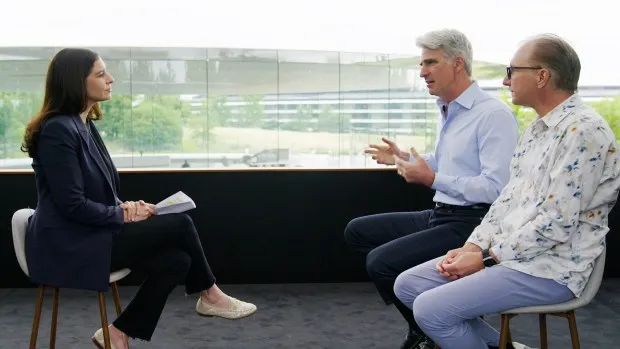
John Giannandrea joined Apple in 2018 from Google, where he led the search giant's AI and machine learning efforts. His arrival at Apple was met with considerable anticipation, as he was tasked with unifying and advancing the company's disparate AI initiatives, with a particular focus on bolstering Siri. Given his background in leading sophisticated AI projects at Google, the expectation was that Giannandrea would inject new life into Apple's intelligent assistant and accelerate its machine learning capabilities across the board.
However, despite significant investments and talent acquisition under his leadership, Siri has continued to struggle with maintaining parity, let alone superiority, against rival AI assistants and the burgeoning field of generative AI models. The Apple Siri AI problems 2025 are well-documented, often highlighted by:
- Limited Conversational Depth: Siri frequently struggles with multi-turn conversations and understanding nuanced context, often requiring users to rephrase commands.
- Stagnant Feature Set: Compared to the rapid pace of innovation seen in Google Assistant, Amazon Alexa, and especially new large language models (LLMs) like ChatGPT, Siri's capabilities have evolved at a slower rate.
- Integration Challenges: While deeply integrated into Apple's ecosystem, Siri's proactive intelligence and ability to anticipate user needs have lagged behind some competitors.
- Performance Inconsistencies: Users often report varying levels of accuracy and responsiveness, impacting overall satisfaction.
These perceived shortcomings have led to a growing disconnect between Apple's reputation for cutting-edge technology and Siri's real-world performance. This context is critical to understanding the John Giannandrea leaving Apple reason, suggesting that a strategic shift in AI leadership became necessary to address these long-standing challenges.
The Succession: Who is Apple's Head of AI Now?
With Giannandrea's departure, the question of who is Apple's head of AI now immediately arises. While official announcements regarding a direct successor are often carefully orchestrated, industry intelligence and related keywords point towards Amar Subramanya Apple VP AI as a key figure poised to take on expanded responsibilities or even the top leadership role.
Amar Subramanya, who has held significant positions within Apple's AI and machine learning division, brings a wealth of experience to the table. His background likely includes expertise in core AI technologies, potentially offering a fresh perspective on how Apple can accelerate its AI development. This transition points to Apple's commitment to internal talent and a strategic effort to re-evaluate its approach to AI.
The new leadership will inherit the immense task of not only refining Siri but also integrating advanced AI capabilities across Apple's entire product line, from the iPhone and Mac to the Apple Watch, Apple Vision Pro, and beyond. This includes exploring deeper applications of generative AI, on-device machine learning, and more sophisticated predictive intelligence.
Why the Change? Analyzing the Strategic Imperative
The decision for a leadership change at such a high level is rarely singular, but a confluence of factors likely contributed to Giannandrea's exit. The primary driver appears to be the strategic imperative to revitalize Apple's AI efforts, particularly in the face of an accelerating competitive landscape.
- The Generative AI Revolution: The past few years have seen an explosion in generative AI, with models like OpenAI's ChatGPT, Google's Gemini, and Meta's Llama demonstrating unprecedented capabilities in natural language understanding, content generation, and complex problem-solving. These advancements have set a new benchmark for AI assistants, making Siri's current state appear increasingly dated. Apple, known for its "think different" approach, cannot afford to be perceived as lagging in such a transformative technological wave.
- Competitive Pressure: Google Assistant and Amazon Alexa have consistently pushed boundaries in smart home integration, proactive assistance, and third-party developer support. While Apple has its HomeKit ecosystem, Siri's role within it has often been reactive rather than truly intelligent.
- User Expectations: Apple's users expect a seamless, powerful, and intuitive experience across all their devices. When Siri fails to deliver on complex queries or lags behind competitors in new features, it detracts from the overall Apple experience.
- Internal Vision Alignment: A leadership change often signals a desire for a new strategic direction. It's possible that the company is looking for a leader who can more aggressively pivot Apple's AI strategy to embrace the latest paradigms, potentially with a greater emphasis on large language models and multimodal AI.
The John Giannandrea leaving Apple reason can therefore be seen as a strategic move to recalibrate Apple's AI trajectory, ensuring it remains at the forefront of innovation rather than playing catch-up.
Impact on Apple's AI Strategy and Products
The impact of leadership change on Apple AI will be profound, touching every aspect of the company's intelligent offerings. Under new leadership, several key shifts are anticipated:
1. Siri's Overhaul and Generative AI Integration
The most immediate and visible change is likely to be a significant overhaul of Siri. This could involve:
- Deep Integration of LLMs: Expect Apple to leverage its own large language models or partner with external providers to imbue Siri with more natural conversational abilities, better contextual understanding, and improved knowledge retrieval.
- Proactive Intelligence: A push towards a Siri that anticipates user needs, offers more personalized suggestions, and intelligently manages tasks across devices without explicit commands.
- Enhanced Developer Tools: Opening up Siri to more robust third-party integrations, allowing developers to build richer, more complex voice-controlled experiences.
- Multimodal Capabilities: Expanding Siri beyond voice to incorporate visual and textual inputs more seamlessly, especially with devices like the Apple Vision Pro.
2. On-Device AI and Privacy
Apple has consistently prioritized user privacy, and this will remain a cornerstone of its AI strategy. The new leadership will likely double down on:
- Edge AI Processing: Maximizing on-device machine learning to process sensitive user data locally, reducing reliance on cloud servers and enhancing privacy.
- Federated Learning: Utilizing techniques that allow AI models to learn from decentralized data without directly accessing individual user information.
- Explainable AI (XAI): Developing AI systems where decisions can be understood and audited, aligning with Apple's transparency principles.
3. AI Across the Ecosystem
The influence of the new AI leadership will extend far beyond Siri:
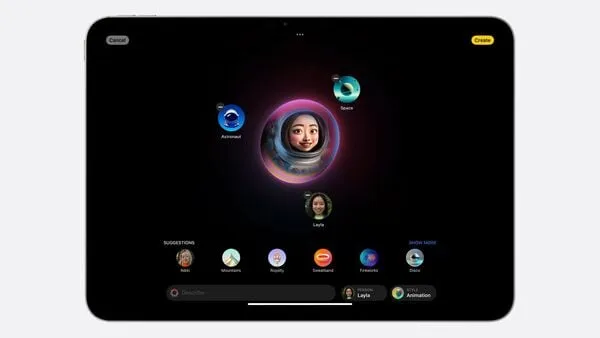
- Photography and Videography: Further advancements in computational photography, image editing, and video processing, leveraging sophisticated AI algorithms for superior results.
- Health and Fitness: More intelligent health monitoring, personalized fitness coaching, and predictive health insights from Apple Watch and Health app data.
- Developer Tools: Enhancements to Xcode and other developer platforms, making it easier for developers to integrate powerful AI and machine learning into their own apps.
- Accessibility: AI-powered features that make Apple products more accessible to users with disabilities, such as advanced text-to-speech, real-time sign language translation, or environmental sound recognition.
4. Hardware-Software Co-Evolution
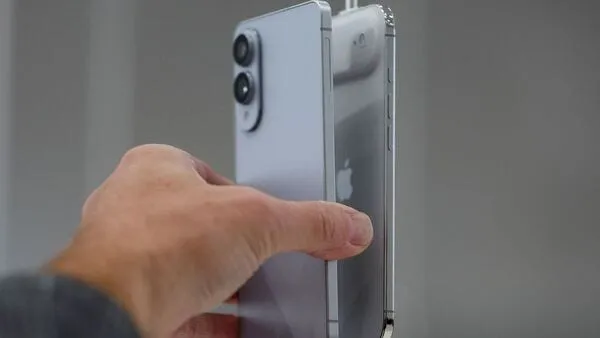
Apple's unique advantage lies in its tightly integrated hardware and software. Future AI developments will undoubtedly be tied to custom silicon, such as the A-series chips in iPhones and the M-series chips in Macs, which feature powerful Neural Engines designed for machine learning tasks. The new AI leadership will likely collaborate closely with hardware teams to optimize AI performance and efficiency directly on Apple silicon.
The Road Ahead: Opportunities and Challenges
The transition in Apple's AI leadership presents both significant opportunities and formidable challenges.
Opportunities:
- Fresh Perspective: New leadership can bring innovative ideas and a renewed sense of urgency to Apple's AI efforts.
- Strategic Reorientation: An opportunity to pivot towards more cutting-edge AI paradigms, particularly generative AI, and redefine Apple's position in the market.
- Unleashing Potential: With its vast user base, deep ecosystem, and robust hardware, Apple has immense potential to integrate advanced AI in ways that enhance user experience profoundly.
- Privacy-First AI: Apple can differentiate itself by delivering powerful AI that respects user privacy, a growing concern for consumers.
Challenges:
- Catching Up: The gap between Siri and its competitors, especially in generative AI, is substantial. Rapid innovation is required to bridge this.
- Talent Acquisition: Attracting and retaining top AI talent in a highly competitive market will be crucial.
- Balancing Innovation and Integration: Implementing radical AI changes while maintaining the seamless, reliable experience Apple users expect is a delicate balance.
- Defining Apple's AI Identity: Clearly articulating Apple's unique vision for AI, distinct from its rivals, will be essential for market perception and user adoption.
Conclusion
The Apple AI leadership change, marked by John Giannandrea's departure, signifies a critical inflection point for the tech giant's artificial intelligence ambitions. Driven by the persistent Apple Siri AI problems 2025 and the rapid advancements in generative AI, this transition underscores Apple's commitment to re-evaluating and reinvigorating its AI strategy.
Under the potential guidance of new leadership, such as Amar Subramanya Apple VP AI, Apple is poised to embark on a new chapter, one that demands a more aggressive and innovative approach to AI development. The coming years will reveal how effectively Apple can leverage its unparalleled ecosystem, hardware-software integration, and unwavering commitment to privacy to redefine its AI narrative and deliver intelligent experiences that truly set it apart in the global tech arena. The stakes are high, and the world will be watching to see if this leadership shift ultimately paves the way for a more intelligent, intuitive, and groundbreaking Apple experience.