Meta Muse Spark Open: Specs, License and Mac Studio Setup
Meta released Muse Spark Open on October 15, 2026: an 816-billion-parameter mixture-of-experts model with 42 billion active parameters, a 1-million-token context window and downloadable weights on Hugging Face. It is the first open release from Meta's flagship Muse Spark line, and Apple published a same-day recipe for running it on two Mac Studios. By Meta's own numbers it still trails the best Chinese open models on coding, and the license carries a revenue clause for hosting companies.
Key takeaways
- Muse Spark Open is an open-weight, natively multimodal reasoning model (816B total, 42B active, 256 experts with 8 active per token). It takes text, image, video and audio in and returns text.
- Meta's model card puts it at 39 on the Artificial Analysis Intelligence Index, behind GLM 5.3 (45), Kimi K3 (44) and Qwen3.8 (40). It leads on tool use (MCP-Atlas 89.2) and on the safety tests Meta reported.
- The NVFP4 weights need at least 700 GB of GPU memory on servers. Apple measured about 25 tokens per second on two M5 Ultra Mac Studios and about 37 on four.
- The Muse Model License is free for most developers, but hosted "model-as-a-service" offerings from companies above $20 million in revenue need a separate deal with Meta.
- OpenRouter lists it at $1.25 per million input tokens and $4.25 per million output tokens.
What Meta actually released
Muse Spark Open comes from Meta Superintelligence Labs (MSL), the group Mark Zuckerberg set up in June 2025 with former Scale AI CEO Alexandr Wang as chief AI officer. MSL's first model, Muse Spark, shipped on April 8, 2026 as a closed model behind the Meta AI assistant. That broke with the open Llama tradition, and Wang said in May that Muse Spark had tripped safety checks that made it "not suitable for open sourcing," according to Implicator.
Six months later, Meta opened it up. The PyTorch blog says Muse Spark Open shares its base model with Muse Spark 1.3. It then got extra safety post-training so it can hold up "as a standalone model without system guardrails." Meta calls it "the most capable US open-weight model to date" on its research blog. The "US" qualifier matters: Chinese open models still score higher on several of Meta's own benchmarks.
It is also not Meta's best model. "These aren't the most capable models that we've developed or released," Wang said at launch, as reported by Implicator. Meta's newer Muse Wonder models remain closed.
Muse Spark Open specs and architecture
The Hugging Face model card has more detail than the launch post:
| Spec | Muse Spark Open |
|---|---|
| Total / active parameters | 816B / 42B |
| Architecture | Mixture-of-Experts Transformer plus a 1.8B Perception Encoder |
| Experts | 256, with 8 active per token |
| Layers | 62 |
| Attention | Grouped-query (128 query heads, 16 KV heads), gated attention, QK-norm |
| Context window | 1M tokens at inference |
| Input / output | Text, image, video, audio in; text out |
| Languages | Trained on data from more than 100 languages |
| Released weights | BF16 and NVFP4 |
| Reasoning effort | low, medium, high, xhigh (default xhigh) |
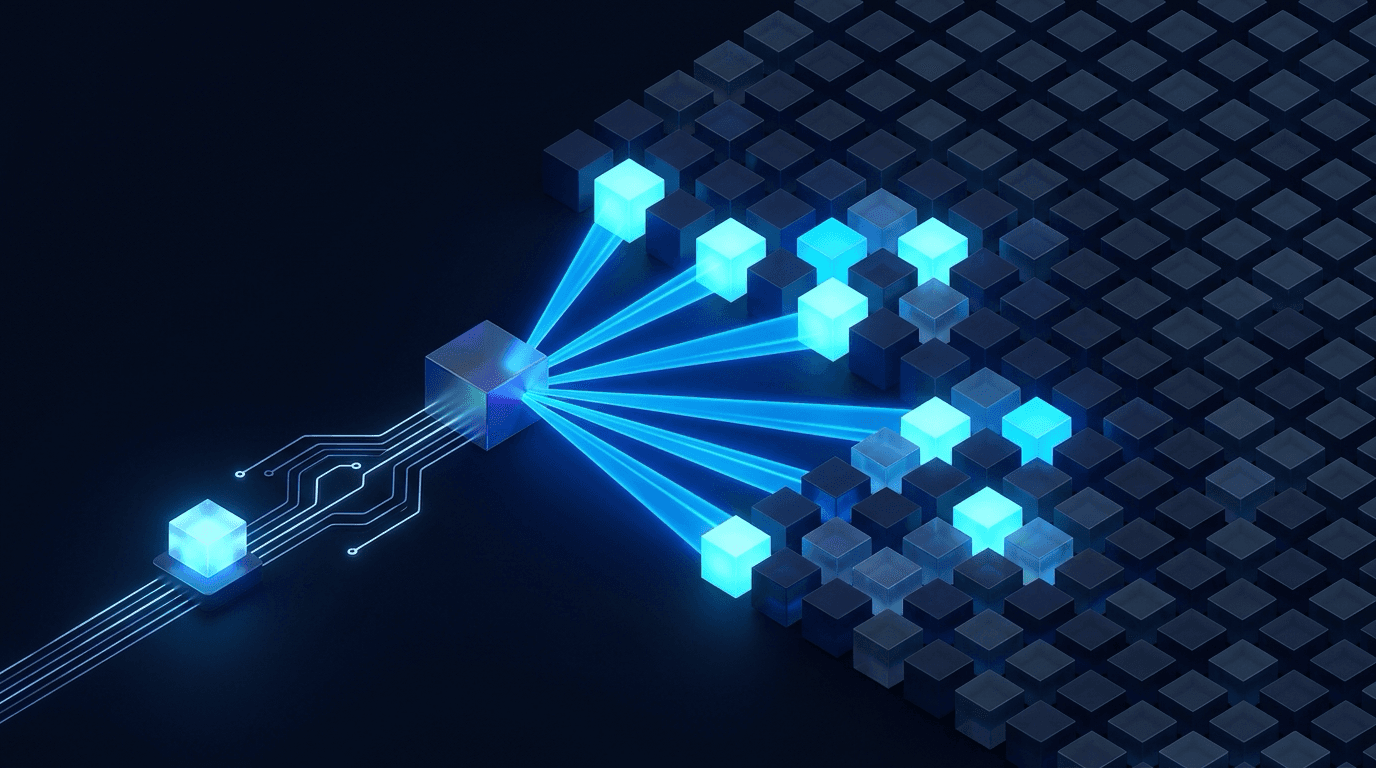
Mixture-of-experts (MoE) means the model is split into many smaller "expert" sub-networks, and a router sends each token to only a few of them. Muse Spark Open stores 816B parameters but uses about 42B for any one token. So it computes roughly like a 42B model but still needs memory for all 816B, which is why running it locally takes so much hardware.
Meta says the model was trained for agentic coding: multi-file refactors, debugging sessions and long-running tasks. The PyTorch post adds that it can browse the web, spawn and coordinate subagents, and use computers across desktop, mobile and browser. Before acting, it writes a separate commentary stating what it intends to do. Meta recommends temperature 1.0, top_p 1.0 and the high or xhigh reasoning setting for coding and agent work.
Benchmarks: where Muse Spark Open leads and where it trails
According to Meta's own model card, Muse Spark Open beats other open-weight models on tool use and safety but trails Kimi K3 and GLM 5.3 on coding. Meta ran every test at xhigh effort, and none of the results had been independently reproduced at launch, as TechCrunch noted.
| Benchmark | Muse Spark Open | Qwen3.8 | GLM 5.3 | Kimi K3 | Nemotron 3 Ultra |
|---|---|---|---|---|---|
| AA Intelligence Index | 39 | 40 | 45 | 44 | 23 |
| Terminal-Bench 2.1 | 76.4 | 82.0 | 83.9 | 85.0 | 53.9 |
| DeepSWE 1.1 | 60 | 57 | 67 | 68 | n/a |
| MCP-Atlas (tool use) | 89.2 | 84.5 | 84.2 | 82.3 | 63.1 |
| JobBench | 61.8 | 52.7 | 61.4 | 54.3 | 27.2 |
| HLE with tools | 61.0 | 56.2 | 62.5 | 56.0 | 37.4 |
| GPQA Diamond | 89.0 | 93.5 | 91.7 | 93.5 | 86.7 |
| StrongREJECT v2 (lower is safer) | 0.5 | 65.6 | 62.9 | 66.6 | 80.7 |
On terminal and software-engineering tests, Muse Spark Open sits 7 to 9 points behind Kimi K3 and GLM 5.3. It wins on tool calling (MCP-Atlas), on JobBench, and on the HLE-Diamond reasoning test without tools (26.1 versus 22.2 for Kimi K3). The widest gap is in safety: on the adaptive StrongREJECT v2 jailbreak test, Meta reports 0.5 for Muse Spark Open against 62.9 to 80.7 for the other open models in the table.
The closed Muse Spark 1.3 shares the same base model, and Wang has said the open version is not Meta's top model. If you need the strongest open coding model today, Meta's own table points to Kimi K3 or GLM 5.3. Muse Spark Open's case rests on tool use, safety tuning and a US-based license holder. If you followed NVIDIA's Nemotron 3 launch, note that Nemotron 3 Ultra is the baseline Muse Spark Open beats by the widest margin.
Running Muse Spark Open: servers, APIs and two Mac Studios
Hardware requirements
The model card gives two numbers: at least 700 GB of VRAM for the NVFP4 weights and at least 2 TB for BF16. In practice that means a multi-GPU server node. Meta lists optimized support in SGLang, vLLM, TensorRT-LLM, Hugging Face Transformers, Apple MLX, llama.cpp and Unsloth, for NVIDIA, AMD, Intel and Apple hardware.
PyTorch shipped custom kernels written in Helion, its kernel language, for operations such as RoPE and RMSNorm. The PyTorch team reports 1.03x to 3.95x kernel-level speedups on NVIDIA GB300 and a 3% end-to-end throughput gain on AMD MI350. TorchTitan supports supervised fine-tuning, LoRA and reinforcement learning on the model.
The Mac Studio setup
The launch's most talked-about detail came from Apple. Apple's machine learning research post shows Muse Spark Open running across linked Mac Studios with M5 Ultra chips. Each machine can hold up to 512 GB of unified memory at 1.2 TB/s of bandwidth. The NVFP4 model needs about 493 GB, so it has to be split across machines.
Networking makes this work. macOS 26.2 added a low-latency RDMA driver over Thunderbolt 5, and MLX v0.30.1 or later uses it through the jaccl backend. Apple ran two parallelism modes:
| Setup (M5 Ultra Mac Studios) | Decode speed | Time to first token |
|---|---|---|
| 2 machines, pipeline parallel | 15.74 tokens/s | 8.4 s |
| 2 machines, tensor parallel | 24.99 tokens/s | 8.2 s |
| 4 machines, tensor parallel | 36.73 tokens/s | 4.8 s |
Pipeline parallelism splits the model by layers. Tensor parallelism splits each layer across machines, which is faster but needs the low-latency links. Apple wired each pair of machines with two Thunderbolt cables. These were short generation tests in Apple's lab, not long agent sessions.
Apple's post serves the model locally with one command:
mlx.launch --hostfile hostfile.json --backend jaccl --env MLX_METAL_FAST_SYNCH=1 -- \
  mlx_lm.server --model meta-models/Muse-Spark-Open-816B-A42B-NVFP4 --port 8080
That exposes an OpenAI-compatible endpoint at http://127.0.0.1:8080/v1, which Apple then plugs into the OpenCode agent for local coding.
Implicator reported that the 512 GB Mac Studio configuration Apple's two-machine recipe relies on was still listed as coming soon on Apple's US store at launch. So Meta's "runs on your desktop" line holds, but only for a desktop setup few developers own.
Hosted options
Most people will use an API. Meta lists Baseten, Fireworks AI, Groq, Modal, Nebius, OpenRouter and Together AI as launch providers. Downloads are also available through Amazon SageMaker AI, Google Cloud Model Garden and Microsoft Foundry Models. OpenRouter lists $1.25 per million input tokens and $4.25 per million output tokens, with a 1,048,576-token context.
The Muse Model License: what you can and cannot do
Muse Spark Open does not ship under Apache 2.0 or MIT. It uses the Muse Model License, and the model card spells out these terms:
- Fine-tuning, derivative models and distillation are allowed, and Meta claims no ownership of outputs.
- Products and documentation must prominently display "Built with Muse Spark Open."
- If a company and its affiliates offer the model to third parties as a hosted service and exceed $20 million in gross revenue over any 12 months, they must notify Meta and sign a separate agreement first. Internal use, research and building the model into your own product features are excluded.
- There is no user-count cap. Llama's community license required a separate license above 700 million monthly active users. The Muse license drops that test in favor of the revenue threshold.
- An acceptable-use policy bans uses such as malware, weapons and impersonation, and the model is not intended for users under 18.
For a startup building a product on top of the model, the terms are workable. For a cloud or inference company reselling access, the $20 million line is the clause to read with a lawyer. Meta's smaller Muse Glimmer (30B), released in August, uses plain Apache 2.0 by comparison.
What Muse Spark Open means for developers
Muse Spark Open gives developers a large US-made open-weight model with a 1M-token window, native audio and video input, and strong tool calling. Teams that need to self-host for data control, or that face procurement rules about where a model comes from, now have a credible option from Meta again.
On Meta's own numbers, Chinese models still lead on coding, and running the model yourself costs server-class memory or several top-spec Macs. The practical path for most teams is to test it through an API against the models they already use, on their own tasks. Mistral's coding models are another point of comparison, as covered in our Devstral 2 and Vibe CLI post.
FAQ
Is Muse Spark Open free to use commercially?
Mostly, yes. The Muse Model License allows commercial use, fine-tuning and distillation with a "Built with Muse Spark Open" attribution. The exception is companies with more than $20 million in revenue that offer the model to others as a hosted service; they need a separate agreement with Meta first.
How much memory does Muse Spark Open need?
The model card lists at least 700 GB of GPU memory for the NVFP4 weights and at least 2 TB for BF16. Apple measured the NVFP4 model at about 493 GB in MLX and ran it across two or four M5 Ultra Mac Studios linked by Thunderbolt 5.
Is Muse Spark Open better than Kimi K3 or GLM 5.3?
Not on coding, according to Meta's own model card. It scores 76.4 on Terminal-Bench 2.1 versus 85.0 for Kimi K3 and 83.9 for GLM 5.3, and 39 versus 44 and 45 on the Artificial Analysis Intelligence Index. It leads on tool use (MCP-Atlas 89.2) and on Meta's reported jailbreak-resistance tests.
How is Muse Spark Open different from Muse Spark?
Muse Spark is Meta's closed model, first released in April 2026. The PyTorch team says Muse Spark Open shares its base model with Muse Spark 1.3 but received extra safety post-training so it can run without Meta's system-level guardrails.
Where can I download Muse Spark Open?
The weights are on Hugging Face at meta-models/Muse-Spark-Open-816B-A42B and through Amazon SageMaker AI, Google Cloud Model Garden and Microsoft Foundry Models. Hosted APIs include OpenRouter, Together AI, Fireworks AI, Groq, Baseten, Modal and Nebius.
Sources
- Meta Research: Introducing Muse Spark Open
- Hugging Face: Muse-Spark-Open-816B-A42B model card
- PyTorch blog: Muse Spark Is Now an Open-Weights Model
- Apple Machine Learning Research: distributed inference with MLX
- TechCrunch: Meta launches an open-weight AI model that runs on Macs
- Implicator: Muse Spark Open trails Chinese rivals at coding
- OpenRouter: Muse Spark Open
- Wikipedia: Meta Superintelligence Labs
- Meta Llama 3 Community License