Skild AI Soars to $14 Billion Valuation with Renewed Backing from SoftBank and Nvidia
Skild AI Rockets to $14 Billion: A New Frontier in Intelligent Robotics
The landscape of artificial intelligence and robotics is continually reshaped by groundbreaking innovations and strategic investments. A recent development that has sent ripples across the global tech community is the astonishing surge in valuation for Skild AI, a U.S.-based robot software startup, which has now reached an estimated $14 billion. This meteoric rise is underscored by significant financial backing and renewed interest from industry behemoths like SoftBank and Nvidia, along with a prior $10 million investment from Samsung.
This monumental valuation not only cements Skild AI's position as a critical player in the burgeoning robotics sector but also signals a profound shift in how intelligent automation is perceived and funded. For tech enthusiasts, developers, startup founders, and professionals alike, understanding the forces behind Skild AI's ascent offers crucial insights into the future trajectory of AI-powered systems and their real-world applications.
The Ascent to $14 Billion: Unpacking Skild AI's Valuation Surge
Skild AI's journey to a $14 billion valuation is a testament to its innovative approach and the immense potential of its core technology. While specific details of the latest funding round contributing to this valuation are emerging, the confirmed involvement of major investors underscores the market's confidence in the company's vision and execution.
SoftBank, a long-time proponent of robotics and AI, is reportedly "re-betting" on Skild AI, indicating a continued and possibly amplified commitment following previous investments. Similarly, Nvidia, a dominant force in AI computing and a critical enabler of advanced robotics through its GPU technology, is also noted to be "re-betting" or considering further substantial investment. These strategic commitments from two of the most influential tech investors highlight Skild AI's perceived value and its alignment with future technological paradigms.
Adding to this formidable financial foundation, Samsung, the South Korean electronics giant, previously invested $10 million in Skild AI. This early backing from a hardware manufacturing powerhouse provided a crucial validation for Skild AI's software solutions, demonstrating the synergy between advanced robotics software and real-world industrial and consumer applications.
The $14 billion figure is not merely a number; it represents a confluence of factors:
- Disruptive Technology: Skild AI's software is poised to solve complex challenges in robotics.
- Strong Investor Confidence: The repeated backing from SoftBank and Nvidia, coupled with Samsung's initial investment, signals deep belief in the company's long-term potential.
- Market Growth Potential: The robotics and AI markets are expanding rapidly, driven by demand for automation in manufacturing, logistics, healthcare, and consumer sectors.
- Strategic Fit: Skild AI's offerings complement the broader ecosystems of its investors, creating powerful synergies.
What Powers Skild AI? Unveiling Their Core Offerings
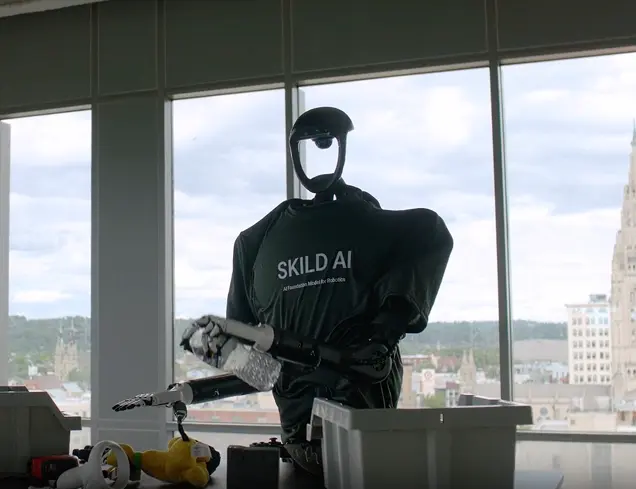
At its heart, Skild AI is a robot software startup. This might sound broad, but its focus lies in developing intelligent software that empowers robots to perform complex tasks with unprecedented autonomy and adaptability. Unlike traditional robot programming that relies on rigid, pre-defined instructions, Skild AI's solutions leverage advanced artificial intelligence to enable robots to perceive, understand, learn, and interact with dynamic environments.
The services offered by Skild AI likely encompass a range of capabilities crucial for next-generation robotics:
- Advanced Perception Systems: Utilizing AI to help robots interpret sensor data (vision, lidar, radar) more effectively, enabling them to recognize objects, understand spatial relationships, and navigate complex spaces.
- Intelligent Decision-Making: Software that allows robots to make autonomous decisions in real-time, adapting to unforeseen circumstances and optimizing task execution without constant human intervention.
- Complex Task Execution: Moving beyond simple, repetitive motions, Skild AI's software enables robots to handle intricate, multi-step processes that require fine motor control, object manipulation, and sequential reasoning.
- Human-Robot Interaction (HRI): Developing interfaces and algorithms that facilitate more natural and intuitive collaboration between humans and robots, crucial for co-working environments and service applications.
- Learning and Adaptation: Integrating machine learning capabilities that allow robots to improve their performance over time, learn from new data, and adapt to variations in their operational environments.
Source: skild.ai
This focus on intelligent software distinguishes Skild AI in a market often dominated by hardware manufacturers. By providing the "brain" for robots, Skild AI aims to unlock new possibilities across various industries, from highly automated factories and logistics hubs to advanced healthcare robotics and even future consumer applications. The demand for such sophisticated software is soaring as industries seek greater flexibility, efficiency, and safety from their robotic workforces.
The Strategic Investors: Why SoftBank, Nvidia, and Samsung Are All In
The caliber of investors backing Skild AI speaks volumes about its potential. Each investor brings unique strategic advantages and aligns with different facets of the robotics revolution.
SoftBank's Vision for an Automated Future
SoftBank Group, under the leadership of Masayoshi Son, has consistently demonstrated a forward-thinking investment philosophy, particularly in AI and robotics. Their past investments, including significant stakes in companies like Boston Dynamics (known for its humanoid and quadruped robots) and ARM Holdings (a crucial player in chip design for AI and IoT), illustrate a long-term commitment to technologies that will define the next industrial era.
SoftBank's "re-betting" on Skild AI signals a belief that advanced robot software is the key to unlocking the full potential of robotic hardware. They understand that without sophisticated AI to control them, even the most advanced robots are merely expensive machines. Skild AI likely fits into SoftBank's broader vision of creating an ecosystem of interconnected AI and robotics companies that can drive widespread automation and digital transformation.
Nvidia's AI & Robotics Ecosystem Dominance
Nvidia's involvement is particularly potent given its foundational role in the AI revolution. As the leading provider of GPUs (Graphics Processing Units) that power most AI training and inference, Nvidia is not just an investor but a critical technology partner for countless AI companies.
Nvidia's push into robotics is evident through platforms like:
- Nvidia Jetson: A series of embedded computing boards designed for AI at the edge, ideal for powering autonomous robots.
- Nvidia Isaac Sim: A robotics simulation platform that allows developers to test and train AI-powered robots in virtual environments before deployment in the physical world.
Skild AI's advanced robot software likely leverages Nvidia's powerful hardware and software tools, creating a synergistic relationship. Nvidia's investment is a strategic move to ensure that the best robot software runs optimally on its platforms, further solidifying its dominance in the AI and robotics ecosystem. It’s a win-win: Skild AI gains capital and access to cutting-edge computing, while Nvidia expands the reach and capabilities of its own technology stack.
Samsung's Future Play: Hardware Meets Intelligent Software
Samsung's earlier $10 million investment in Skild AI is a clear indicator of the South Korean conglomerate's strategic pivot towards future growth engines beyond traditional consumer electronics. As a global manufacturing powerhouse, Samsung operates vast, highly automated factories. Investing in robot software like Skild AI aligns perfectly with its need for more intelligent, flexible, and efficient automation solutions in its own operations.
Beyond manufacturing, Samsung has also shown interest in service robotics and home automation. Intelligent software is paramount for developing robots that can navigate complex home environments, interact with users naturally, and perform diverse tasks. Samsung's investment suggests a recognition that the future of robotics lies not just in building better hardware, but in empowering that hardware with superior AI capabilities. This collaboration could potentially lead to Skild AI's software being integrated into Samsung's future robotic ventures, from industrial applications to smart home devices.
Key Strengths and Differentiators of Skild AI
Skild AI's impressive valuation and high-profile backing are rooted in several key strengths that differentiate it in a competitive market:
-
AI-Driven Intelligence: At its core, Skild AI's strength lies in its sophisticated AI algorithms. These algorithms enable robots to go beyond programmed tasks, allowing them to perceive their environment, learn from experience, make real-time decisions, and adapt to dynamic conditions. This level of intelligence is critical for deploying robots in unstructured or rapidly changing environments.
-
Versatile and Scalable Software Platform: The ability of Skild AI's software to be deployed across a wide range of robot types and applications is a significant advantage. Whether it's an industrial manipulator, an autonomous mobile robot (AMR), or a service robot, a unified and adaptable software platform reduces development time and costs, accelerating adoption across industries.
-
Proprietary Technology and IP: While specific details are proprietary, it's highly probable that Skild AI possesses unique algorithms, data processing techniques, or machine learning models that give it a competitive edge. This intellectual property forms the foundation of its advanced capabilities and acts as a barrier to entry for competitors.
-
Focus on "Robot Brains": By specializing in the software layer, Skild AI avoids the complexities and capital intensity of hardware manufacturing. This allows them to concentrate resources on developing the most advanced AI for robotics, making them a crucial partner for hardware companies looking to enhance their offerings.
-
Strategic Partnerships: The relationships with Nvidia and Samsung are not just about funding; they are strategic alliances. Access to Nvidia's cutting-edge AI hardware and software development tools, and potential integration with Samsung's vast manufacturing and consumer ecosystems, provides unparalleled opportunities for growth and market penetration.
Source: skild.ai
These strengths position Skild AI not just as a technology provider but as an enabler of the next generation of intelligent automation, capable of transforming industries and impacting daily life.
The Broader Robotics Landscape: Implications of Skild AI's Ascent
Skild AI's impressive valuation and investor backing are more than just a company success story; they are a powerful indicator of broader trends and shifts within the robotics and AI industries.
Accelerating the AI-Robotics Convergence
The emphasis on Skild AI's software capabilities highlights the increasing convergence of AI and robotics. The future of robotics isn't just about faster, stronger, or more agile machines; it's about making them smarter. This means AI will be embedded deeper into every aspect of robot design and operation, from low-level motor control to high-level strategic planning. Companies that can provide superior AI "brains" for robots will be at the forefront of this revolution.
Validation of the Software-First Approach
For years, the robotics industry was largely hardware-centric. However, Skild AI's valuation underscores a growing realization that software is the key differentiator. Intelligent software platforms offer flexibility, scalability, and adaptability that hardware alone cannot. This trend will likely encourage more investment in robotics software startups and foster an ecosystem where hardware and software specialists collaborate more closely.
Impact on Industrial and Service Robotics
The implications for industrial automation are immense. Factories can become more adaptable, reconfigurable, and efficient with AI-driven robots that can learn new tasks on the fly. In service robotics, from healthcare to logistics and hospitality, Skild AI's technology could enable robots to perform more complex and nuanced interactions, paving the way for wider adoption in public and private spaces.
Global Race for AI Talent and Innovation
The significant investment in Skild AI also reflects the intense global competition for AI talent and innovation. Countries and corporations are vying to lead in AI development, recognizing its strategic importance for economic growth and national competitiveness. Such high valuations attract top talent and further stimulate research and development in critical areas of AI and robotics.
Challenges and Opportunities Ahead
While the future appears bright, challenges remain. The ethical considerations of AI in robotics, regulatory frameworks, public acceptance, and the need for robust, secure, and explainable AI systems will all play crucial roles in the widespread deployment of intelligent robots. However, companies like Skild AI, with strong backing and a clear vision, are well-positioned to navigate these complexities and lead the charge into a more automated and intelligent future.
Conclusion
Skild AI's rocket-like ascent to a $14 billion valuation, propelled by the strategic investments of SoftBank, Nvidia, and Samsung, marks a pivotal moment in the evolution of artificial intelligence and robotics. By focusing on advanced, AI-powered robot software, Skild AI is not just building better robots; it is building the intelligence that will unlock the full potential of automation across industries. This development underscores the critical importance of software in driving the next wave of technological innovation and signals a future where intelligent machines play an increasingly integral role in our lives and economies. As the lines between AI, software, and hardware continue to blur, Skild AI stands as a powerful example of how visionary technology, backed by strategic capital, can redefine the boundaries of what's possible.
Sources
- Samsung Invests $10 Million in U.S. Robot Software Startup Skilled AI
- 스킬드 AI 몸값 140억달러로…소프트뱅크·엔비디아 '재베팅'
- "Nvidia and SoftBank Consider Investment in Robotics Firm 'Skilled AI'" - The Asia Business Daily
- Robotics revolution: Skild AI could skyrocket to $14bn with Nvidia and SoftBank backing - Capacity