China AI Export Controls Draft: Models, Agents and Chips
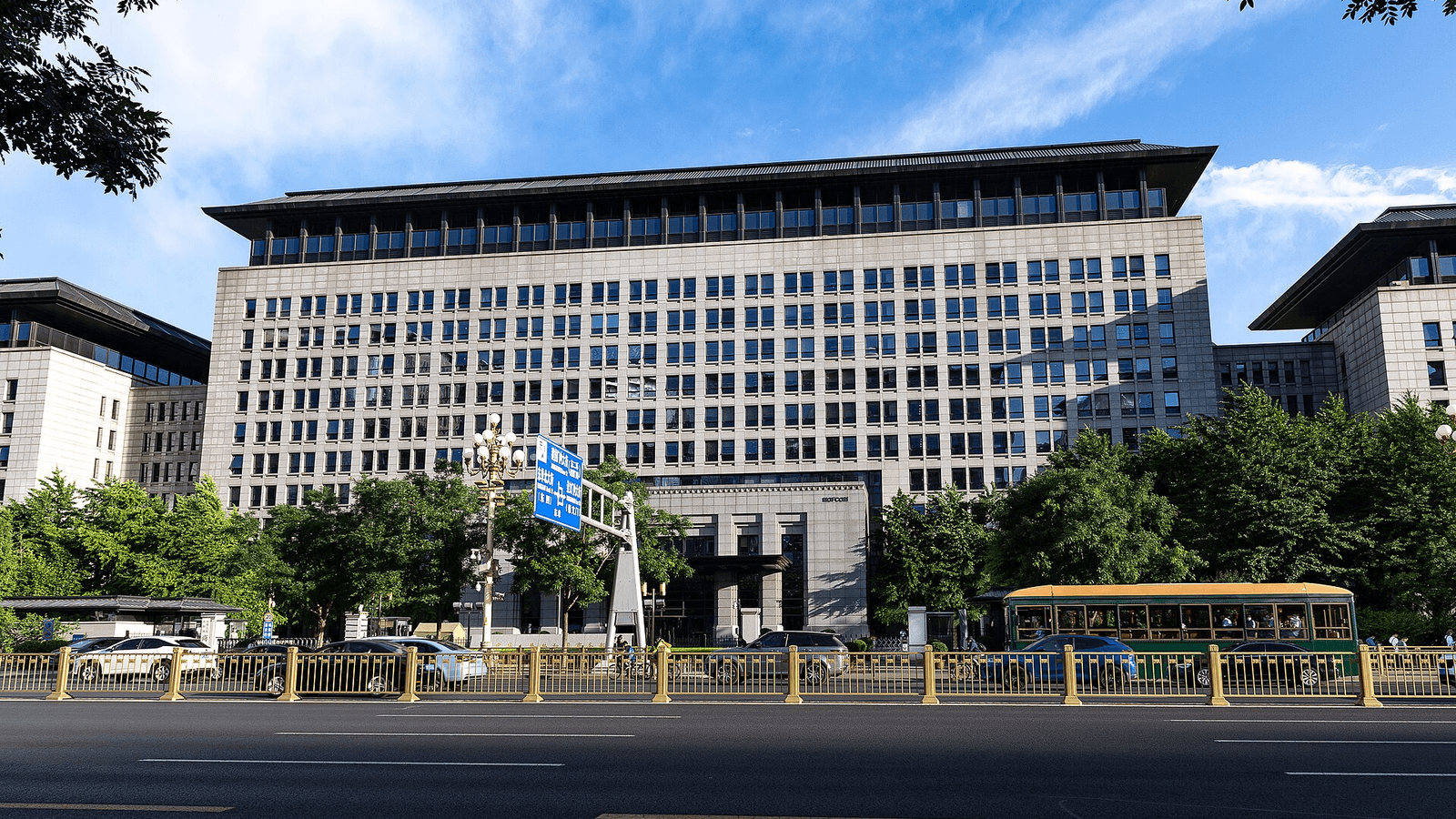
China's AI export controls draft, published on October 16, 2026 by the Ministry of Commerce (MOFCOM) and the Ministry of Science and Technology, would add 23 AI technologies to the list of technologies that need permission to leave China, or cannot leave at all. The list covers large-model weights and source code, AI agents, AI chip design and the technology behind clusters of more than 10,000 accelerators. Selling access through an API, an app or SaaS stays outside the rules.
The draft matters because China now has several of the world's strongest open and closed models, and a growing number of its AI companies deploy abroad. Since October 16 those exporters have also had to register covered deals with MOFCOM. Below is what the draft bans, what it restricts, the thresholds it uses, and how it compares with the US rule that tried something similar in 2025.
Key takeaways
- The proposal adds 40 technologies to the Catalogue of Technologies Prohibited and Restricted from Export: 23 in AI, 12 in solar and 5 in biomedicine. Fourteen would be prohibited and 26 restricted, according to MOFCOM's spokesperson.
- Model weights, key checkpoints, source code and architecture of a large model are restricted if the model used at least 10^26 FLOPs of training compute, has at least 2 trillion parameters, or ranks in the global top 10 on public evaluations.
- Models trained on China's "core data" would be banned from export; models trained on "important data" would be restricted.
- Offering a restricted model to foreign users through an API, app, web page, SaaS or lightweight on-device deployment is not a technology export. Deploying the model on servers abroad is.
- Technology already public through open source or academic papers is out of scope.
- Public comments run until November 15, 2026. A temporary registration duty for exporters started on October 16.
What MOFCOM published on October 16
The notice is MOFCOM and MOST Announcement No. 48 of 2026. It proposes revising the catalogue that governs technology exports, a list China has updated several times since 2001. It has two attachments: the draft list of AI, biomedicine and solar technologies and a registration form.
"Prohibited" means the technology may not be exported at all. "Restricted" means an exporter needs a license from the commerce authorities before transferring it abroad.
MOFCOM's spokesperson described the AI part as covering large models, AI agents, computing clusters and information processing. The spokesperson said the revision is routine and "does not target any specific country, region or entity," and framed the AI controls as a way to prevent loss of control and improper spread of the technology.
Outside reaction treated it as more than housekeeping. Lian Jye Su, chief analyst at Omdia, told the Associated Press the move "can be seen as a response to Western countries posting sovereignty requirements on AI, robotics, telecommunications." Gary Ng, a senior economist at Natixis, said "the world is getting more fragmented in trade and investment, but also in access to technologies."
What would be banned
The draft groups the AI technologies into 11 catalogue entries. Four are in the prohibited section:
- Deepfake detection for cross-border data security: anti-forgery systems built for China's cross-border data security work, with detection accuracy and recall of at least 95% on synthetic video, audio, images or multimodal content.
- AI-driven malicious code: automated generation and mutation of malware that could attack critical infrastructure, defense or core government systems, with thresholds such as a 60% success rate against multi-engine malware detectors, sandbox detection or escape, and batch generation of evasive variants.
- Large models trained on China's core data: models trained on "core data," a category defined under China's Data Security Law, and then offered as a service.
- High-performance agents for sensitive uses: agents built specifically or mainly for critical infrastructure, defense or core government use that reach the performance level set in the restricted agent entry below.
The first two are security tools. The third and fourth depend on what data a model learned from and where an agent is used; neither sets a capability bar on its own.
What would be restricted
The other seven AI entries are restricted. These are the ones most commercial AI companies will look at first.
| Entry | What is covered | Threshold in the draft |
|---|---|---|
| Large models | Weights, key checkpoints, source code, architecture, training optimization and inference acceleration | Any one of: training compute of at least 10^26 FLOPs; at least 2 trillion parameters; "world-leading" capability |
| Large models | Models trained on China's "important data" | Narrow exemptions, e.g. important data at most 0.1% of training data with safeguards |
| AI agents | Task planning, multi-agent coordination, tool use, game decision-making | For example: 20 or more sub-steps at 90% average success; 60 or more concurrent agents; 200 or more integrated tools at 90% selection accuracy |
| AI chip design | Architecture, instruction sets, IP cores, software stacks | Any one of several traits, including 14 nm or finer process, 2.5D/3D packaging or high-speed interconnect; also some 3D NAND and DRAM design |
| Computing clusters | Interconnect, fault tolerance, communication scheduling, heterogeneous scheduling | For clusters of more than 10,000 AI accelerator cards, e.g. chip-to-chip or node-to-node bandwidth of at least 800 GB/s |
| AI vulnerability discovery | AI tools that find and exploit software flaws | For example: 50% end-to-end exploit success against mainstream operating systems or browsers |
| Information processing | Voiceprint recognition, Chinese and minority-language translation, high-accuracy deepfake detection and steganography | Accuracy thresholds such as 98% deepfake detection accuracy and recall |
"World-leading" has a definition. The draft says it means ranking in the global top 10, at the time of export, on public evaluations by mainstream testing bodies or large industry platforms, covering overall performance, specific capabilities, global call volume, safety or training efficiency.
That clause is the one most likely to catch Chinese frontier labs, because rankings change every few weeks. The AP noted that models such as Moonshot's Kimi K3 and Alibaba's Qwen 3.8-Max already exceed 2 trillion parameters, although the draft names no company or model.
The chip-design entry is broad as written. A design needs only one of the listed traits, and the list includes very common ones, such as a 14 nm or finer process or the ability to do floating-point or integer math. The final text may narrow this after comments.

Why APIs are exempt but overseas deployment is not
The most practical line in the package is in the spokesperson's Q&A. When a company uses a restricted large model to offer API calls, app or web interaction, SaaS applications or lightweight on-device deployment to foreign users, that "does not fall within the scope of large-model technology export management."
Deploying a restricted AI technology on infrastructure abroad is different. MOFCOM says overseas localized deployment counts as a technology export. If the deployment runs on the company's own overseas cloud, where risk is "relatively controllable," it may qualify for automatic licensing and other simplified procedures.
In practice:
- A Chinese lab selling tokens through its own API to developers in Europe or Southeast Asia would not need an export license for that.
- Shipping the weights to a foreign cloud provider or a customer's data center so they can host the model would.
- Running the model in the lab's own data center abroad would be an export, probably with an easier licensing path.
Baker McKenzie, in an October 18 client note, describes automatic licensing as a mechanism that "would allow certain exports of restricted technologies essentially upon filing," and says it is expected to be defined in later rules.
What it means for open-source models
A footnote in the draft says technologies that have already entered the public domain through open source or published papers are not managed. Weights already on Hugging Face stay where they are.
Future releases are less clear. A second footnote lists open-sourcing restricted AI technology among the cases eligible for automatic licensing, alongside Chinese companies running their own computing centers abroad, taping out chips overseas, joint research with foreign partners and work on international standards. That points to a filing step before release. The draft does not ban new open releases, but the procedure is not written yet.
For open-weight labs like DeepSeek, whose V4.1-Flash-1017 update shipped under the MIT license a day after the draft, the question is whether a future model above 2 trillion parameters or in the global top 10 would need that filing before the weights go public.
The registration rule that is already in force
Unlike the catalogue changes, the registration duty took effect immediately. From October 16 until the revised catalogue takes effect, any exporter must register with MOFCOM's online system before exporting a technology on the proposed list.
The announcement lists four covered cases:
- transferring ownership of a technology abroad, such as an IP assignment,
- licensing a domestic technology for use abroad,
- a change that puts the technology's owner or controlling party outside China,
- other cases MOFCOM specifies.
The form asks for both parties, the destination country, the technology, its use and the expected value. Baker McKenzie stresses that "registration does not itself amount to an approval or authorization."
China's AI export controls vs the US AI Diffusion Rule
The 10^26 threshold is familiar. In January 2025 the US Commerce Department's AI Diffusion interim final rule created ECCN 4E091, which controlled the weights of closed models trained with more than 10^26 operations, while leaving published weights alone. In May 2025 BIS said it would rescind that rule and replace it.
| China draft (October 2026) | US AI Diffusion Rule (January 2025) | |
|---|---|---|
| Status | Draft; comments until November 15, 2026 | Rescinded by BIS in May 2025 |
| Compute threshold | At least 10^26 FLOPs, or 2 trillion parameters, or global top 10 | More than 10^26 operations |
| Open or published weights | Already-public technology excluded; new open-source releases eligible for automatic licensing | Published weights excluded |
| API and SaaS access | Explicitly not an export | Not treated as a transfer of weights |
| Data-based rule | Models trained on China's core or important data | None |
| Chips and clusters | Chip design and cluster know-how in the same list | Chip controls handled under separate rules |
The biggest difference is the data rule. The US rule asked how much compute a model used. China's draft also asks what data it learned from, which pulls the Data Security Law into AI export policy.
How this fits China's earlier catalogue changes
China has used this catalogue for strategic technology before:
- August 2020: additions included personalized recommendation technology based on data analysis, at the time a factor in talks over the sale of TikTok's US business.
- December 2023: China banned the export of rare-earth extraction and separation technology.
- July 2025: battery cathode material technology such as lithium iron phosphate moved onto the restricted list.
In each case Chinese companies were among the strongest in the field. The October 2026 draft adds frontier AI models and agents to that list, alongside polysilicon and thin-wafer solar technology.
What happens next
MOFCOM is taking comments until November 15, 2026 by email, fax or mail, using the contacts listed in the announcement. After that it will publish a final catalogue, which may change thresholds or wording. Points to watch:
- whether the "world-leading" top-10 test stays, and whose rankings count,
- whether the chip-design entry narrows from "any one of" these common traits,
- how automatic licensing for open-source releases and overseas own-cloud deployment works in practice,
- whether the final rule keeps the API and SaaS exemption unchanged.
FAQ
What is China's AI export control draft?
It is a proposal published on October 16, 2026 by China's Ministry of Commerce and Ministry of Science and Technology to add 40 technologies, 23 of them in AI, to the catalogue of technologies prohibited or restricted from export. It covers large models, AI agents, AI chip design, computing clusters and some security and language technologies.
Does the draft ban using Chinese AI models outside China?
No. MOFCOM says offering a restricted large model to foreign users through API calls, apps, web pages, SaaS or lightweight on-device deployment is not a technology export. The rules apply to transferring the technology itself, such as weights, source code or overseas deployment.
Which AI models are covered?
The core technology of a large model is restricted if any one of three tests is met: at least 10^26 FLOPs of training compute, at least 2 trillion parameters, or a global top-10 ranking on public evaluations at the time of export. Models trained on China's "core data" would be banned from export, and those trained on "important data" restricted.
Are open-source models affected?
Technology already public through open source or academic papers is excluded. The draft lists open-sourcing restricted AI technology among the cases eligible for automatic licensing, so future open releases above the thresholds may need a filing first. The procedure has not been published.
Is anything in force already?
Yes. Since October 16, 2026, exporters must register with MOFCOM before exporting any technology on the proposed list, until the revised catalogue takes effect. Registration is not an approval.
Sources
- MOFCOM and MOST Announcement No. 48 of 2026 (October 16, 2026)
- MOFCOM spokesperson Q&A on the catalogue revision (October 16, 2026)
- Draft list of AI, biomedicine and solar technologies (PDF on Wikimedia Commons)
- AP via Anchorage Daily News: China moves to curb tech exports including AI
- Baker McKenzie: China proposes expanded export controls on AI, biopharma and solar (October 18, 2026)
- Caixin: report on the draft
- Federal Register: Framework for Artificial Intelligence Diffusion (January 15, 2025)
- BIS: Commerce rescinds AI Diffusion Rule (May 2025)
- National Business Daily: 2020 catalogue revision
- Reuters via The Globe and Mail: China bans export of rare-earth processing technology (December 2023)
- electrive: China restricts battery cathode technology exports (July 2025)