DeepSeek V4.1-Flash-1017: Benchmarks, Pricing, Architecture
DeepSeek V4.1-Flash-1017 is a dated update to DeepSeek's smallest V4.1 model, released on October 17, 2026 with open weights under the MIT license. By DeepSeek's own numbers it gains 11 points on Terminal-Bench 4.0 and almost 9 on ProgramBench while writing shorter outputs, and the API price stays the same. On the same day DeepSeek opened a paid Search and Fetch API that runs on its own search engine.
Within a day the model sat at the top of Hugging Face's trending list and on the Hacker News front page. This guide covers what changed, where the model leads and trails, what it costs, and how the architecture keeps a 1M-token context cheap to serve.
Key takeaways
- DeepSeek V4.1-Flash-1017 is a minor update to DeepSeek-V4.1-Flash, which shipped on September 10, 2026. The API name stays
deepseek-flash, so existing integrations already use it. - The biggest jumps, per the model card, are Terminal-Bench 4.0 (31.2 to 42.3), ProgramBench (20.3 to 29.1) and Apex Bench v1.1 (64.6 to 72.1).
- In DeepSeek's comparison table it beats Opus 5 and GPT-5.6 Sol on DeepSWE v1.1, Automation-Bench and Agents' Last Exam, and still trails Opus 5 on HLE, Terminal-Bench 4.0, ProgramBench and NL2Repo-Bench.
- Off-peak API pricing is $0.15 per million input tokens on a cache miss and $0.60 per million output tokens. Peak hours cost twice as much.
- The model is a multimodal mixture-of-experts (MoE) design with 552B backbone parameters. It activates 8B parameters per token during prefill (reading the prompt) and 16B during decode (generating the answer), and its global KV cache takes about 890 bytes per token.
- The new Search and Fetch APIs cost $0.75 per 1,000 successful requests. Calls made through DeepSeek Harness, Claude Code or Codex are free until November 1, 2026, Beijing time.
What DeepSeek released on October 17
DeepSeek's API changelog has two entries for October 17, 2026. One upgrades V4.1-Flash to DeepSeek-V4.1-Flash-1017 in the API, the web chat and the mobile app. The other opens the Search/Fetch API, which DeepSeek describes as an AI-native search engine indexing hundreds of billions of web pages.
"1017" is a date stamp for October 17, so this is a refresh of the September model and not a new generation. The changelog says the calling method and pricing are unchanged, and you keep using the model name deepseek-flash. According to the pricing page, the legacy names deepseek-v4-flash and deepseek-v4-flash-vision-exp are still accepted and are now served by the 1017 model.
DeepSeek also says the update shortens task execution time and output length. At an unchanged per-token price, fewer tokens per task means a lower bill per task. The changelog adds that the model is tuned for DeepSeek Harness (DeepSeek's open-source coding agent), Tencent CodeBuddy and WorkBuddy, and recommends Harness 0.2.1-rc.1 or later.
The weights are on Hugging Face under the MIT license, which allows commercial use and modification.
Benchmarks: before and after the update
Every score below comes from DeepSeek's model card and changelog. No independent lab had re-run them when this was written, so treat them as the vendor's claims.
| Benchmark | V4.1-Flash (Sep) | V4.1-Flash-1017 | Change |
|---|---|---|---|
| Terminal-Bench 4.0 | 31.2 | 42.3 | +11.1 |
| ProgramBench | 20.3 | 29.1 | +8.8 |
| Apex Bench v1.1 | 64.6 | 72.1 | +7.5 |
| HLE (no tools) | 36.8 | 42.6 | +5.8 |
| Automation-Bench v1.0.6 | 54.8 | 60.5 | +5.7 |
| Chartography (with tools) | 78.9 | 83.0 | +4.1 |
| Agents' Last Exam | 31.8 | 35.4 | +3.6 |
| BabyVision (with tools) | 89.6 | 92.5 | +2.9 |
| DeepSWE v1.1 | 74.2 | 77.0 | +2.8 |
| NL2Repo-Bench | 65.4 | 68.2 | +2.8 |
| ZeroBench-main (with tools) | 49.0 | 51.0 | +2.0 |
The largest gains are on long, multi-step agent work inside a terminal or a codebase, such as Terminal-Bench and ProgramBench. Knowledge and vision tests moved less. That matches how DeepSeek describes the release: an agentic tune on top of the same base model.
The card names the harness behind two results. Terminal-Bench 4.0 ran inside the Claude Code harness and DeepSWE v1.1 used Mini-SWE-V2; ZeroBench is scored pass@5. A score produced with a different harness is not directly comparable.
How it compares with Opus 5, GPT-5.6 Sol, K3 and GLM-5.3
The model card also lists four competitors. These are DeepSeek's figures as well.
| Benchmark | V4.1-Flash-1017 | Opus 5 | GPT-5.6 Sol | K3 | GLM-5.3 |
|---|---|---|---|---|---|
| HLE (no tools) | 42.6 | 56.3 | 44.5 | 43.5 | 42.0 |
| Terminal-Bench 4.0 | 42.3 | 51.8 | 39.9 | 12.6 | 37.9 |
| DeepSWE v1.1 | 77.0 | 74.0 | 73.0 | 67.5 | 66.9 |
| ProgramBench | 29.1 | 37.0 | 23.0 | 17.5 | 19.0 |
| NL2Repo-Bench | 68.2 | 75.3 | 56.8 | 58.0 | 58.0 |
| Automation-Bench v1.0.6 | 60.5 | 50.3 | 45.8 | 46.7 | 48.8 |
| Agents' Last Exam | 35.4 | 28.6 | 26.7 | 27.6 | 28.5 |
| Apex Bench v1.1 | 72.1 | 65.8 | 54.3 | 47.8 | 56.6 |
Where V4.1-Flash-1017 leads
On DeepSWE v1.1, Automation-Bench, Agents' Last Exam and Apex Bench, the 1017 model scores higher than every other model in the table, Opus 5 included. All four ask an agent to plan, call tools and recover from mistakes over many steps.
Where it trails
Opus 5 stays clearly ahead on HLE (56.3 vs 42.6), Terminal-Bench 4.0 (51.8 vs 42.3), ProgramBench (37.0 vs 29.1) and NL2Repo-Bench (75.3 vs 68.2). On the three vision tests Opus 5 is one or two points higher, and GPT-5.6 Sol leads ZeroBench-main at 53.0.
Put together, the model is close to the frontier on agentic coding and behind it on hard reasoning. Google's latest model shows a different mix of strengths; see our breakdown of Gemini 4 Argon's benchmarks.
DeepSeek V4.1-Flash-1017 API pricing and the Search/Fetch API
DeepSeek prices deepseek-flash per million tokens, and off-peak rates are half the peak rates. Peak hours run from 01:00 to 04:00 and from 06:00 to 10:00 UTC, Monday to Friday, excluding Chinese public holidays. Weekends are off-peak all day.
| Per 1M tokens | deepseek-flash (V4.1-Flash-1017), off-peak / peak | deepseek-v4-pro, off-peak / peak |
|---|---|---|
| Input, cache hit | $0.003 / $0.006 | $0.022 / $0.044 |
| Input, cache miss | $0.15 / $0.30 | $0.66 / $1.32 |
| Output | $0.60 / $1.20 | $1.98 / $3.96 |
| Concurrency limit | 2,500 | 500 |
Source: DeepSeek Models & Pricing, checked October 18, 2026.
Here is a worked example with those rates. An agent run that reads 200,000 uncached input tokens and writes 20,000 output tokens costs about $0.084 at peak and $0.042 off-peak. Cached input costs 1/50 of the cache-miss rate, so long agent sessions that keep a stable prompt prefix get much cheaper.
Both models support a 1M-token context, up to 384K output tokens, JSON output, tool calls, the Responses API and an Anthropic-compatible endpoint at https://api.deepseek.com/anthropic. Only deepseek-flash accepts image input.
Search and Fetch API
The Search & Fetch guide documents two endpoints. Search (POST /v1/tools/search) returns between 1 and 50 web results per query. Each result has a short snippet, a longer summary meant for the model, a rerank score and an authority score, and queries accept operators such as site:, lang:, after: and before:. Fetch (POST /v1/tools/fetch) returns one page as Markdown.
Each API costs $0.75 per 1,000 successful requests, and DeepSeek does not bill failed calls, empty results or timeouts. Both are capped at 5 queries per second per account. If you reach the DeepSeek API through DeepSeek Harness, Claude Code or Codex, the server-side search calls stay free until 00:00 Beijing time on November 1, 2026.
How the architecture keeps a 1M context cheap
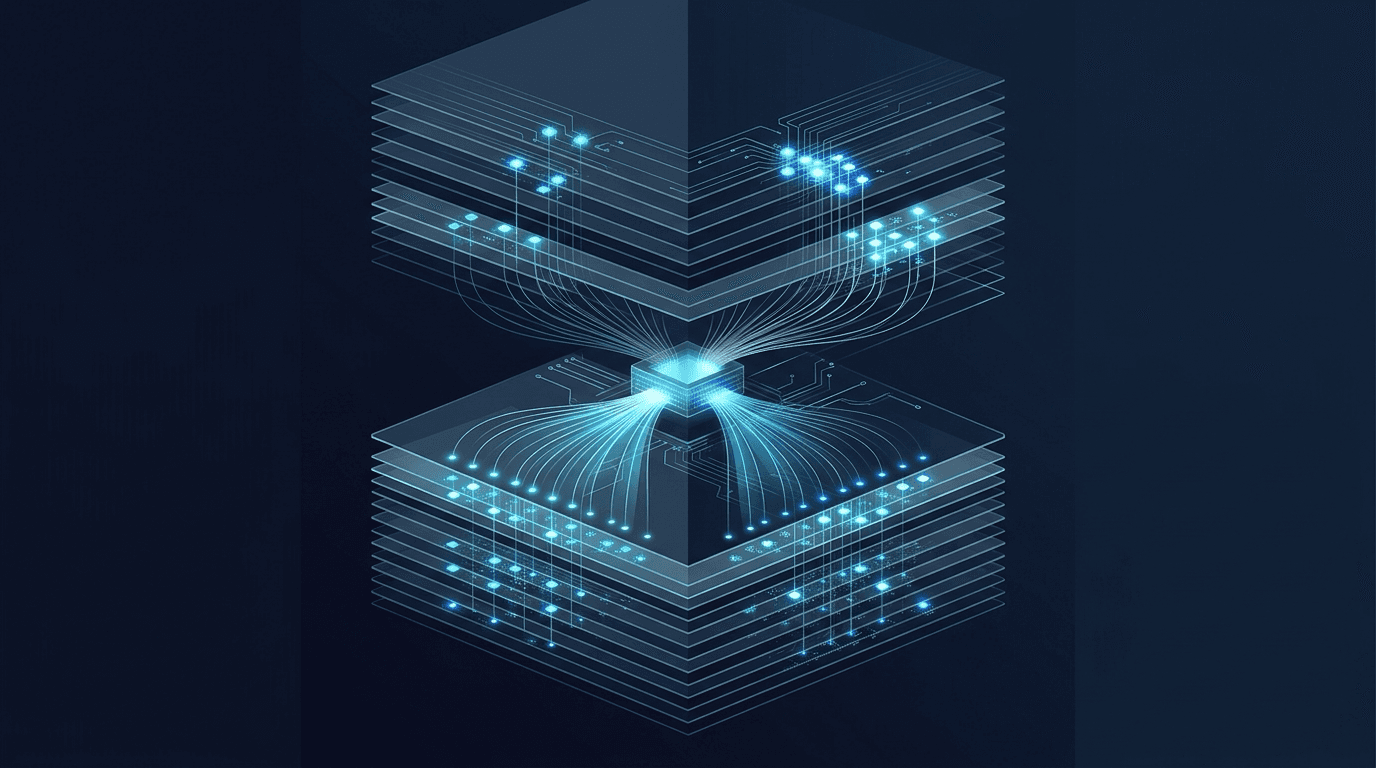
The 1017 update keeps the V4.1-Flash architecture from DeepSeek's tech report, DeepSeek-V4.1-Flash: Pushing the Limits of KV Cache Compression, posted to arXiv in September 2026. Most of it targets the KV cache, the memory of earlier tokens that a model keeps so it does not recompute them for every new token. The report notes that in long agent workloads, large KV caches strain GPU memory (HBM), SSD capacity and bandwidth. Four ideas do most of the work.
The first is a causal encoder-decoder (CED). The 40 layers split into a 20-layer causal encoder and a 20-layer decoder. The decoder's global key-value (KV) cache is projected from the encoder's final hidden states, so prefill only runs the first half of the network for global attention. DeepSeek says this nearly halves prefill compute.
The second is Compressed Sparse Attention 2 (CSA2). Layers share their main KV cache and indexer keys. Each layer runs in one of three modes (Full, Reindex or Reuse), and Reuse layers also share the top-k positions they attend to. With an FP4 KV cache on top, the global KV cache drops to about 890 bytes per token, roughly a quarter of V4-Flash.
The third, SWA Bounded Replay, applies to sliding-window attention. The model replays only the most recent window of tokens to rebuild that cache, which cuts the persistent cache kept on SSD or host memory to about one-eighth of V4-Flash.
The fourth is sparse experts plus Engram memory. Each MoE layer has 1 shared expert and 384 routed experts, and 6 routed experts fire per token. An Engram module adds 196B parameters of hashed n-gram memory on top of the 552B backbone. The report says going from a 4K to a 1M context raises decode compute by only about a quarter.
For million-token agent sessions, serving cost tracks memory per token more closely than parameter count. V4.1-Flash puts its design effort into that memory, and the 1017 update puts its training effort into getting agents to finish in fewer steps.
Can you run DeepSeek V4.1-Flash-1017 locally?
The weights are public, but you will not run the full model on a laptop. According to the Hugging Face file listing, the repository holds 48 safetensors shards totaling about 510 GB, mostly FP8 and 8-bit tensors. Hugging Face's metadata counts about 763B stored parameters once the Engram and vision parts are included.
The model card lists these options:
- vLLM:
vllm serve "deepseek-ai/DeepSeek-V4.1-Flash-1017"starts an OpenAI-compatible server. - SGLang:
python3 -m sglang.launch_serverwith the model path, or thelmsysorg/sglangDocker image. - Transformers with
device_map="auto", and Docker Model Runner. - llama.cpp, Ollama, LM Studio and Jan through community quantizations.
The repo has no Jinja chat template. DeepSeek ships a Python reference encoder in the encoding folder and points production users to deepseek-recipe, a Rust library with Python bindings that turns Messages, Chat Completions and Responses API requests into DeepSeek's prompt format. The recommended sampling settings are temperature 1.0 and top_p 1.0.
If you want a large open-weight model that targets one desktop machine, Meta's latest release fits better; see how Muse Spark Open runs on a Mac Studio. For most teams the hosted deepseek-flash API will cost far less than hardware for a 510 GB checkpoint.
Who should switch, and what to watch
Teams running coding or automation agents over long contexts should test it first, since cache-hit pricing and shorter outputs add up over long sessions. The API name did not change, so anyone calling deepseek-flash is already on 1017 and should rerun their own evals to catch behavior changes.
Be more careful if your workload depends on hard reasoning of the HLE kind, or if you need Opus 5's Terminal-Bench level. Check data-residency and compliance rules before sending production data to a China-based API. Self-hosting the MIT weights is the alternative.
Three things are worth watching next: independent re-runs of these benchmarks, how the Search API's result quality compares with established search APIs, and how billing for harness search calls from November 1 changes the cost of an agent run.
FAQ
What is DeepSeek V4.1-Flash-1017?
DeepSeek V4.1-Flash-1017 is an October 17, 2026 update to DeepSeek-V4.1-Flash, an open-weight multimodal mixture-of-experts model with a 1M-token context. DeepSeek reports higher agentic coding scores and shorter outputs than the September version, at the same API price.
How much does the DeepSeek V4.1-Flash-1017 API cost?
DeepSeek's pricing page lists the deepseek-flash model at $0.15 per million input tokens on a cache miss, $0.003 on a cache hit and $0.60 per million output tokens during off-peak hours. Peak-hour rates, on weekdays from 01:00 to 04:00 and 06:00 to 10:00 UTC, are double.
Is DeepSeek V4.1-Flash-1017 open source?
The weights and the repository are released on Hugging Face under the MIT license, which permits commercial use, modification and redistribution. The repository contains the weights, inference code and a prompt encoder, but no training data.
Is DeepSeek V4.1-Flash-1017 better than Claude Opus 5?
Not overall. In DeepSeek's own table it beats Opus 5 on DeepSWE v1.1, Automation-Bench, Agents' Last Exam and Apex Bench, while Opus 5 leads on HLE, Terminal-Bench 4.0, ProgramBench and NL2Repo-Bench. DeepSeek reported all of these figures itself.
What hardware do I need to run it locally?
The full checkpoint is about 510 GB of FP8 and 8-bit weights, so you need a multi-GPU server running vLLM or SGLang. Community quantizations for llama.cpp and Ollama are smaller but still need far more memory than a typical workstation has.
Sources
- DeepSeek-V4.1-Flash-1017 model card, Hugging Face
- DeepSeek API change log (Oct 17 and Sep 10, 2026 entries)
- DeepSeek API: Models & Pricing
- DeepSeek API: Search & Fetch guide
- DeepSeek-V4.1-Flash: Pushing the Limits of KV Cache Compression (arXiv 2609.19969)
- deepseek-recipe on GitHub
- Bloomberg: DeepSeek pushes out updated AI model it says is faster, leaner