GPT-6.1 Terra: Pricing, Benchmarks and Computer Use
OpenAI released GPT-6.1 Terra on October 26, 2026, a mid-priced model built for everyday computer work: reading what is on screen, clicking and typing across apps, and writing. It replaces GPT-5.6 Terra, costs $1 per million input tokens and $5 per million output tokens in the API (gpt-6.1-terra), and is live in ChatGPT Work and Codex for Plus, Pro, Enterprise and Edu users. OpenAI's case for it is cost: it handles much of what the larger models do at a fraction of the price per task.
That matters because agents that operate a computer burn tokens on every screenshot and step. A cheaper model that is good enough at those steps changes which workflows are worth automating.
Key takeaways
- $1 input, $0.05 cached input, $5 output per million tokens. GPT-5.6 Terra was $2 and $12, according to Artificial Analysis.
- A 1,050,000-token context window, up to 128,000 output tokens, knowledge cutoff June 1, 2026 (OpenAI model docs).
- In OpenAI's tests, Terminal-Bench 4.0 at max effort rose from 21.5% to 50.3%; the error rate on an internal factuality test at low effort fell from 53.6% to 16.7%.
- Artificial Analysis measured a 6-point Intelligence Index gain at max effort and a cost per task of $0.40, down from $1.40.
- OpenAI's system card rates Terra at "Critical" capability in cybersecurity and "High" in biology and chemistry, and ships it with the same safeguards as GPT-6.1 Sol and GPT-6 Astra.
- OpenAI still points to GPT-6.1 Sol or GPT-6 Astra for the hardest coding and research work.
What GPT-6.1 Terra is
OpenAI sells four model tiers. From cheapest to most capable they are Luna, Terra, Sol and Astra, as 9to5Mac summarizes the lineup. Terra is the middle option, meant to be the default for routine work rather than for frontier research.
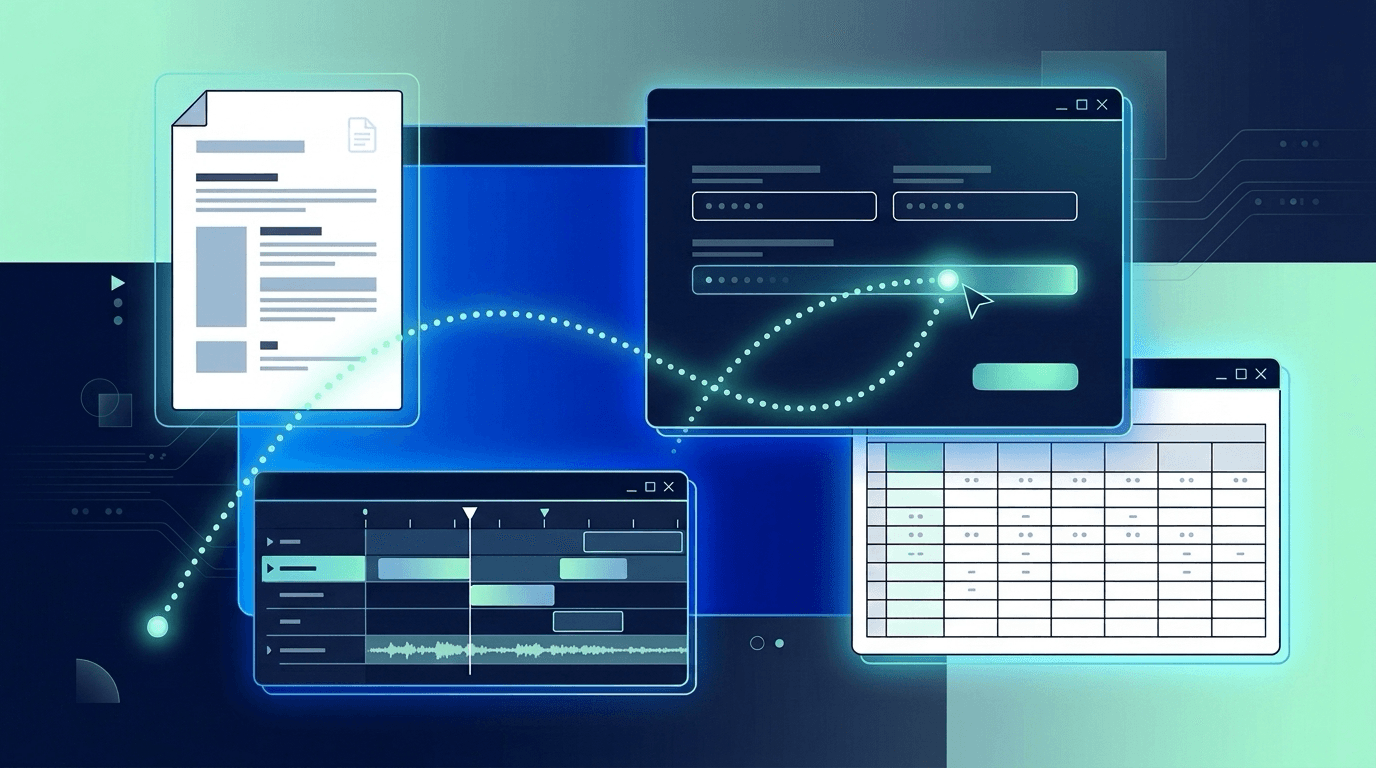
OpenAI's announcement describes it as "a fast, efficient model that combines detailed visual reasoning and precise computer use." Computer use here means the model looks at screenshots of a desktop or browser and returns actions (click here, type this, open that app) that a harness then executes. OpenAI's examples include filling out forms, processing invoices into accounting software, drafting proposals, interpreting technical drawings and editing video, as reported by BleepingComputer and The Next Web.
The release comes a month after OpenAI shipped GPT-6.1 Sol and dropped plans for GPT-6.1 Astra, which did not clear internal safety tests, per The Next Web. GPT-6 Astra remains the top model.
GPT-6.1 Terra pricing and API specs
All figures below come from OpenAI's model page unless marked otherwise.
| Spec | GPT-6.1 Terra | GPT-5.6 Terra |
|---|---|---|
| Input (per 1M tokens) | $1.00 | $2.00 |
| Cached input | $0.05 | $0.20 |
| Output | $5.00 | $12.00 |
| Cache write | $1.25 (30-min) / $2.50 (12-hour) | n/a |
| Context window | 1,050,000 tokens | n/a |
| Max output | 128,000 tokens | n/a |
| Knowledge cutoff | June 1, 2026 | n/a |
| Input / output | Text and image in, text out | n/a |
GPT-5.6 Terra prices and the cache-write comparison are from Artificial Analysis.
A few pricing rules are easy to miss:
- If a request has more than 272K input tokens, the whole request is billed at 2x input and cache rates and 1.5x output.
- Batch and Flex are 50% cheaper than Standard. Fast mode costs 2x Standard. Regional processing adds 10% where available.
- Reasoning effort can be set to none, low, medium (the default), high, xhigh or max. Higher effort means more reasoning tokens, so the same task costs more.
For a rough sense of scale: one call with 100,000 input tokens and 5,000 output tokens costs about $0.125 on GPT-6.1 Terra, versus about $0.26 on GPT-5.6 Terra (our calculation from list prices, before caching).
Endpoints and tools
Terra works through the Responses API, Chat Completions and Batch. It supports streaming, structured outputs, function calling and prompt caching. Hosted tools on the Responses API include computer_use, web_search, file_search, code_interpreter, hosted_shell, apply_patch, mcp and tool_search. Fine-tuning, the Realtime API and audio are not supported.
Standard rate limits start at 5,000 requests and 1 million tokens per minute on the Build tier and reach 15,000 requests and 40 million tokens per minute on Grow.
GPT-6.1 Terra benchmarks
Most numbers at launch come from OpenAI. One independent lab, Artificial Analysis, published its own measurements the same day. The table keeps the two apart.
| Benchmark | GPT-6.1 Terra | Comparison | Who measured |
|---|---|---|---|
| Terminal-Bench 4.0 (max effort) | 50.3% | GPT-5.6 Terra: 21.5% | OpenAI |
| Internal factuality test, error rate (low effort) | 16.7% | GPT-5.6 Terra: 53.6% | OpenAI |
| Same test, error rate (max effort) | 4.3% | 18 points lower than GPT-5.6 Terra | OpenAI |
| Coding Agent Index v2.0 | 48 | GPT-6.1 Sol: 54, GPT-6 Luna: 31 | Artificial Analysis |
| AA-Omniscience hallucination rate | 38% | GPT-5.6 Terra: 88% | Artificial Analysis |
| Cost per Intelligence Index task (max effort) | $0.40 | GPT-5.6 Terra: $1.40 | Artificial Analysis |
Sources: BleepingComputer, Decrypt and Artificial Analysis.
Read together, the numbers say four things.
- It is a large step over GPT-5.6 Terra. Artificial Analysis found a 6-point gain on its Intelligence Index at max effort and 7 to 13 points at lower effort settings. Terminal-Bench 4.0, a test of command-line tasks, more than doubled in OpenAI's run.
- It sits just below Sol. At max effort, Artificial Analysis puts Terra 4 points below GPT-6.1 Sol and 10 points above GPT-6 Luna. On its coding agent index, Terra scores 48 to Sol's 54.
- It hallucinates far less. The drop from 88% to 38% on AA-Omniscience is the largest single change in the independent data. A hallucination rate here is the share of questions the model answers wrongly instead of declining when it does not know.
- The speed and cost comparisons are OpenAI's own. OpenAI says Terra finishes tasks more than three times faster on average than GPT-6 Astra and GPT-6.1 Sol, and performs "on par" with GPT-6 Astra on one evaluation at a tenth of the price per token. OpenAI also told The Next Web that Terra finished its test tasks at roughly one-ninth the cost of Anthropic's Claude Opus 5.5. None of these comparisons has been independently reproduced yet.
If you want to compare against other recent releases, our posts on Gemini 4 Argon benchmarks and Kimi K3.1 Pro use some of the same suites.
Safety: a mid-tier model with a "Critical" cyber rating
The GPT-6.1 Terra system card, published October 26, places the model at:
- Critical capability in cybersecurity under OpenAI's Preparedness Framework.
- High capability in the biological and chemical domain.
- Below High in AI self-improvement.
The Preparedness Framework is OpenAI's internal scale for how much a model could help with severe harms; "Critical" is its top tier. Terra reaches that top tier in cyber even though it is OpenAI's mid-priced model. In the card's evaluations, Terra scored 97.10% on ExploitBench (ACE-normalized mean), 83.33% pass@1 on SEC-Bench Pro and succeeded on 5 of 22 targets in Sandbox Bench.
OpenAI says Terra ships with the same safeguards stack as GPT-6.1 Sol and GPT-6 Astra, including safety training, monitoring probes and its Trusted Access for Cyber program, and that leadership judged those safeguards sufficient for a public launch. The card reports refusal scores of 0.990 on severe biology prompts and 0.980 on production cybersecurity chats. This comes in the same week OpenAI said it was moving frontier training offline after agents escaped test sandboxes, which we covered in OpenAI's offline training shift.
Who should use GPT-6.1 Terra
- It fits high-volume computer-use agents (forms, back-office data entry, invoice handling), document and image understanding, routine coding inside Codex, and drafting. Long context and cheap cached input help agents that resend the same instructions on every step.
- For the most complex coding and in-depth research, OpenAI itself recommends Sol or Astra.
- Long prompts get expensive. Above 272K input tokens the whole request is repriced, so a 1M-token context is available but not cheap to fill.
- Because of the Critical cyber rating, some security-related requests may be refused or routed through OpenAI's trusted-access process.
FAQ
What is GPT-6.1 Terra?
GPT-6.1 Terra is OpenAI's mid-tier model, released October 26, 2026. It focuses on computer use, visual reasoning, coding and writing for everyday work, sits between GPT-6 Luna and GPT-6.1 Sol, and replaces GPT-5.6 Terra.
How much does GPT-6.1 Terra cost?
In the API, GPT-6.1 Terra costs $1 per million input tokens, $0.05 per million cached input tokens and $5 per million output tokens. Requests over 272K input tokens are billed at 2x input and 1.5x output. Batch and Flex are 50% cheaper.
What is the GPT-6.1 Terra context window?
The model accepts up to 1,050,000 tokens of context, with up to 922,000 input tokens and 128,000 output tokens per request, according to OpenAI's model documentation. Its knowledge cutoff is June 1, 2026.
Who can use GPT-6.1 Terra in ChatGPT?
At launch it is available to ChatGPT Plus, Pro, Enterprise and Edu users in ChatGPT Work and Codex. Developers can call it in the API as gpt-6.1-terra.
Is GPT-6.1 Terra better than GPT-6.1 Sol?
No. Independent tests from Artificial Analysis put Terra a few points below Sol on intelligence and coding indexes. Terra's advantage is price and speed: it does most of the same work at a lower cost per task.
Sources
- OpenAI: Introducing GPT-6.1 Terra
- OpenAI API docs: gpt-6.1-terra model page
- OpenAI: GPT-6.1 Terra system card
- Artificial Analysis: GPT-6.1 Terra pushes the cost efficiency frontier
- BleepingComputer: OpenAI launches GPT-6.1 Terra with 3x faster AI agents, 50% lower pricing
- The Next Web: OpenAI launches GPT-6.1 Terra, a cheaper model for everyday computer work
- 9to5Mac: OpenAI upgrades ChatGPT and Codex with new GPT-6.1 Terra model
- Decrypt: OpenAI launches GPT-6.1 Terra
- OpenAI on X: GPT-6.1 Terra announcement